There is no single path to reconnecting with Creole heritage. These stories show how people can become separated from parts of their culture and community, but also how they find their way back.
It is easy to imagine a reconnecting Creole as someone who knew nothing about the culture, discovered a distant ancestor, and suddenly decided to become Creole. People with that experience may exist. But after speaking with people in Louisiana, Chicago, Georgia, and Maryland, I found stories far more varied. Some always knew their families were Creole. Some grew up with the food, music, names, or traditions but never learned the language. Others inherited the identity while living far from their family's communities. Still, others discovered a Creole ancestor through genealogy.
They did not all start from nothing. In many families, something stopped passing from one generation to the next. Now these people are trying to understand what remains, what was lost, and what they might pass on. Their stories are about more than the past. They are about family, language, music, food, and community.
And they, too, are part of the Creole story.
Part One: What We Inherited and Lost
What does cultural loss look like? Sometimes it does not mean forgetting an identity at all.
Imari Jones, also known as Zyèl, grew up in the DMV. Her father was born in Lafayette and raised in Franklin, Louisiana, and her grandfather came from Oaklawn in St. Mary Parish. Zyèl always knew she had Creole roots. She did not need a DNA test to tell her: Creole food was part of home life, zydeco often played in the background, and her mother decorated for Mardi Gras. She knew she was Creole and made sure other people did, too. But knowing her identity and understanding everything behind it were different. As she grew older, she learned about Kouri-Vini, Creole Heritage Month, and Catholic traditions her family had once practiced. Zyèl had not lost her Creole identity. She had inherited one with missing pieces.
For Caleb Baham, or Kélèb Baam, from Monroe, a missing piece was language. His paternal Creole family has roots in New Orleans and other parts of southern Louisiana. His great-grandmother, Mawmaw Mary of Plaucheville, was the last Louisiana French speaker he knew of in his family. Caleb began learning French in school and even wrote her a letter in French. But she developed dementia before he had the chance to learn how she spoke or truly speak French with her. Today he studies Avoyelles French partly in her honor. His experience shows how easily a family can lose access to a language when there is no chance to pass it on.
Sometimes a family preserves pieces of its history but loses their meaning. Camille, from Chicago, grew up knowing that her maternal family came through Mississippi and Alabama. Her surnames include Williams, Butler, Beroe, and Brown, with ties to Greenwood, Natchez, and Mobile. She noticed similarities between her family and Creole families, but genealogy helped her understand them. When I asked what had been lost, she answered: “Surnames and context.”
A recipe may survive without the story behind it. A family may remember a grandmother speaking French without knowing which variety she spoke. A surname may remain while its history fades. The inheritance survives, but its explanation does not.
Dr. Alassad Rasheed traces his Creole roots to Bayou Chicot in St. Landry Parish and other parts of southern Louisiana, with family names including Mollette, Doucet, West, and Fontenot. He never forgot his heritage. Military service and relocation separated him from the community. Disconnection is not always a deliberate rejection or a huge systematic ordeal. Sometimes life just creates distance, and later generations inherit that distance.
Living near relatives can make cultural knowledge part of everyday life. Children hear older people speak, learn recipes in the kitchen, and absorb family stories without thinking of it as a lesson. After one generation moves away, that transmission can become harder. After several generations, descendants may be left with pieces they struggle to explain.
Reconnecting Creoles do not all begin in the same place because cultural loss did not affect every family in the same way.
Part Two: Finding the Way Back
For some, reconnection begins with something they always knew was there. For others, it begins with a discovery that raises new questions.
KC, a Georgia native with Gullah Geechee, Black American, and Louisiana Creole ancestry, had been interested in Creole culture without knowing much about its place in their family story. That changed when KC's grandparents researched their genealogy and identified two Creole women in the paternal line: a great-grandmother and great-great-grandmother. KC began looking for more, including Creoles speaking about their experiences on TikTok. One early discovery was that the popular image of Creole people as simply light-skinned, mixed-race people from New Orleans was incomplete. But learning about family history also brought doubts:
“What if I'm not Creole enough?”
“What if I'm not doing enough Creole things?”
“What if I shouldn't be saying I'm Creole or partially Creole because I didn't grow up in Louisiana?”
Mia, whose family has lived in Chicago for generations, has different questions. Her maternal grandmother moved from Mississippi to Chicago during the Great Migration. Unlike Zyèl or Caleb, Mia did not grow up with a known Creole identity, and she still does not know where a possible connection enters her family. She had long felt drawn to Louisiana and Creole culture. Before finding any evidence, she even told her sister that she suspected Creole ancestry. Later, DNA results from her mother and sister suggested connections to Creole populations, including Avoyelles Parish, and Mia noticed the surname Guillory among DNA matches. She still laughs about having told her sister so.
But Mia knows those clues do not establish a particular family line. Her maternal grandfather remains unknown, and she has not yet identified the ancestor who might connect her to Louisiana. Although other Creoles have welcomed her, she sometimes worries about being an “imposter.” She intends to keep asking questions without claiming more than she knows.
Finding an ancestor, however, is only one part of reconnection. For others, the search leads toward language and the people keeping it alive.
For Caleb, a turning point came when he studied French at Université Sainte-Anne in Nova Scotia through a CODOFIL scholarship. There, Louisiana teachers and advocates showed him that Louisiana French was still a living language. People were speaking it, teaching it, and building community around it. He moved from studying standard French toward Louisiana French and Kouri-Vini.
Camille took another route. Genealogy led her to history, and history led her to Creole researchers and language educators. Having already studied French, she thought: “If I can learn a colonizer language, I can learn an ancestral one.” She began exploring Kouri-Vini, too.
One person starts with a family memory; another with genealogy, DNA clues, or language. There is no single doorway back.
Part Three: Finding a Place in the Community
Discovering family history and finding community are not the same thing. Records can identify where an ancestor lived. DNA tests can offer clues. Books can teach vocabulary. None can replace relationships with living people.
For Mia, that became clear through a post on Threads. She asked to connect with Louisiana Creoles because she wanted to understand the culture better. What surprised her was the welcome:
“I was welcomed with nothing but open arms. I didn't feel like an outsider at all. I really felt at home.”
That welcome did not answer every question about her family, but it gave her people she could learn from while she continued her search.
Nathan, a student at the University of Louisiana at Lafayette with maternal Creole roots in Breaux Bridge and Catahoula, found a similar sense of community. Learning French opened the door to older interviews, music, and history. It also brought him to French tables, where acquaintances gradually became friends. One musician even began teaching him fiddle. Nathan describes the spirit he encountered this way:
“If you care enough to be here, then you are one of us, and we stick together.”
Caleb built friendships through festivals, conferences, and immersion programs. KC found encouragement online. Zyèl connected with people online who shared resources even though she lived far from Louisiana.
Of course, not every experience was or will be welcoming. Zyèl recalls people outside the community telling her she could not be Creole because she was Black. Dr. Rasheed and Camille also describe a particular form of colorism within Creole communities. Judgments about skin color, appearance, geography, or how someone was raised can make reconnection harder, especially when they come from the community a person hopes to be a part of.
Mia understands why some Creoles are protective of their culture. She knows that people sometimes adopt the label without wanting to learn the history or traditions behind it. But she takes her own search seriously. Learning about a possible Creole connection does not replace her Black American identity; she wants to honor both. The people I interviewed are not all seeking the same relationship to Creole identity. Camille, for example, describes herself as a Chicago Mississippian with partial Louisiana Creole ancestry. She wants to understand that ancestry, not replace the identity she already has.
That is worth remembering: not everyone reconnecting is searching for a new identity. Many simply want to understand more fully who they already are.
And when they find community, they bring more than questions. They bring something to offer.
Part Four: What We Carry Forward
Across these interviews, the conversation often moved quickly from what had been lost to what people hoped to build. KC wants to learn more about traditional food and is beginning a family cookbook to preserve recipes passed down by women in the family. Zyèl hopes to become fluent in Kouri-Vini and spend more time in Louisiana, including during Creole Heritage Month.
Caleb's interest in language has expanded into music, folktales, festivals, theater, and the Courir de Mardi Gras, for which he makes his own costume each year. He aims to carry these traditions forward and share them with others. Camille hopes to speak Kouri-Vini comfortably with others and eventually help people learn it. She also wants to continue rebuilding her family tree and perhaps find living relatives along the way.
Same, a young respondent from a Cajun family in Tangipahoa Parish, is thinking about the next generation. After feeling disconnected from the culture they remembered from childhood, Same found community again through music and Kouri-Vini. Since then, writing in the language has become deeply personal, motivating him to teach it to their future children.
That changes the question from “What did my family lose?” to “What can we do to keep from losing it again?”
Nathan takes the idea further. He wants to preserve older stories and music, but he also believes Creoles must keep creating. Future generations deserve more than memories of what their ancestors practiced. They deserve music, stories, and traditions that speak to their own lives.
A living culture cannot survive as an artifact in a museum. It needs constant evolution and engagement to survive. A process of survival and growth in which Reconnecting Creoles have a clear role. But that role carries responsibility.
Camille advises people beginning their journey to listen. Zyèl encourages them to learn about the wider culture rather than treating one family's experience as universal. Mia emphasizes relationships with people who actively practice and sustain Creole traditions. Caleb puts the balance clearly: people have a connection to their heritage, but that connection comes with responsibility. Those who have maintained Creole languages and traditions through assimilation, migration, and stigma deserve respect. Reconnection requires learning, accepting correction, and recognizing that ancestry alone does not make someone an authority.
But responsibility should not be confused with silence.
Reconnecting Creoles also have experiences worth hearing. They understand what it means when cultural knowledge stops passing between generations, and they are becoming language learners, musicians, cooks, storytellers, and organizers. Their participation speaks not only to what was lost, but to what can be rebuilt. Their journeys reflect the different ways Creole families experienced migration, assimilation, Americanization, and change. They also show how the community's future can be different from its past.
Caleb cannot go back and record Mawmaw Mary's French. Zyèl cannot recover childhood afternoons with her grandfather. Camille cannot undo the gaps in her family's history between the Gulf South and Chicago. And Mia cannot invent an ancestor's name to answer questions she is still researching.
But they can change what the next generation receives.
A recipe can be written down. A language can be learned. An ancestor's story can be recovered. And someone who once had to search for cultural knowledge may one day pass it on at home.
Perhaps that is one of the most important things reconnecting Creoles bring to the community: a reminder that cultural loss does not have to end the story. Sometimes it becomes the reason someone chooses to continue it.
Reconnecting Creoles are not simply searching for their place in Creole history. They are already part of what Creole culture becomes next.
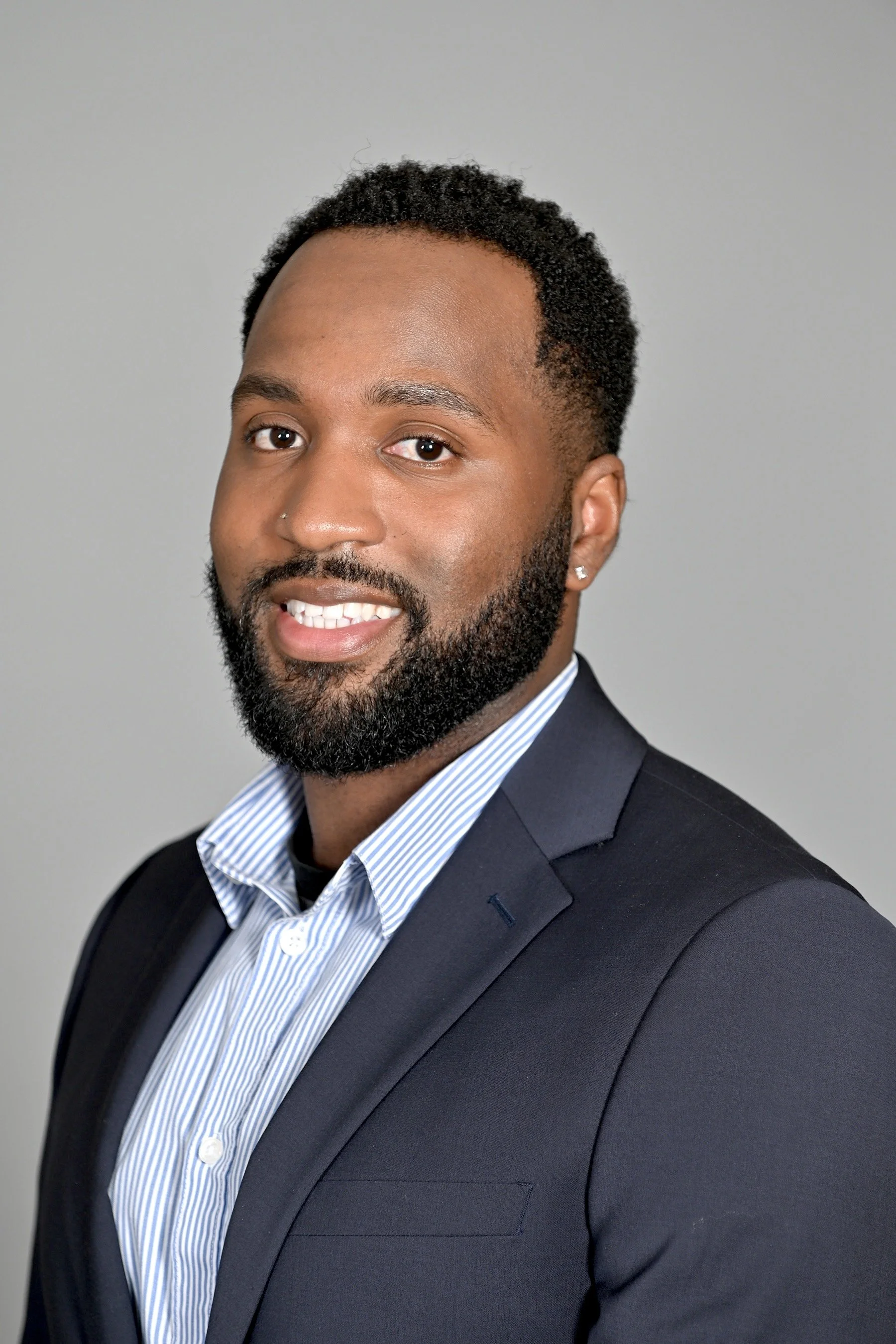
Kaël “Chaoui” Leblanc
Leblanc is a banker and development strategist whose work has included environmental revitalization across Latin America, financial resilience planning in the Caribbean, and strategies that strengthen community economies and organizational capacity throughout the Gulf South. He hopes to support the revitalization of Creole culture and the preservation of Kouri Vini and Louisiana French by incorporating his culture in future academic papers and literary projects.