Tourism at historic site: Laura Plantation
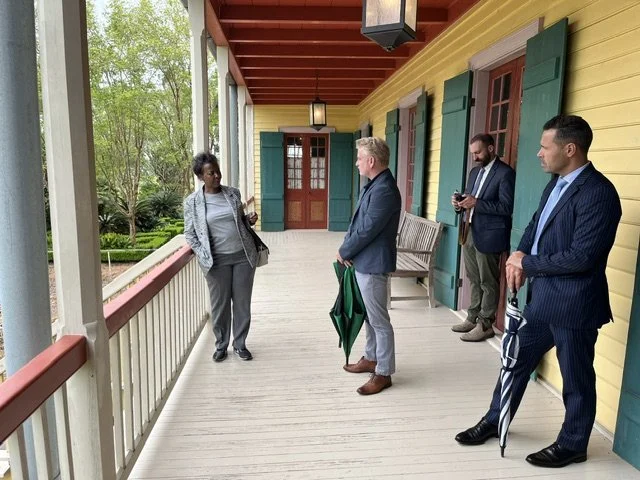
Around New Orleans in Saint James parish, one can find Laura Plantation at the edge of the levee. A Creole plantation that preserves a story which connects generations, ethnicities, and cultures to render the history accessible for a large audience.
Jou Jòrdi spoke with Joseph Dunn, who’s in charge of marketing, public relations, and communications. Employed at Laura for 30 years, he has seen the evolution that has taken place over the years. The plantation sees people from all over the globe, often attracted by history and who want to know more about slavery in the state. According to Dunn, 70% of the historic site’s visitors are domestic with 30% foreign. Francophones account for approximately 25% of visitors, which is still more than other historic sites due to their ability to take a tour in French.
For the majority, they visit Laura with an idea blinded by a common story, where the Creole identity is not considered in American history. Dunn states, “They can find it difficult to imagine people who considered Americans foreigners or who didn’t speak English.” An issue Dunn explains also touches Louisianans due to their relationship with this history being formed by an education system that has often failed to recognize and support the local history. A reality amplified by the decline of our French and Creole languages in the community. For Dunn, this story cannot be told without breaking the typical American story. He said, “We must really speak in the terms that they can understand and repeat that people in Louisiana were not Americans.”
Recently, Dunn and the team at Laura Plantation added a new tour that touches on the story of 9 enslaved men who fought in the Civil War against the Confederates. Men such as Édouard Gros who was born, raised on the plantation, and joined the Union army. The visit takes place outside with panels that explain their life, origins, work, military service, and life after the war. For the team, it was necessary to recount their stories outside because “they were not permitted to go” into the big house. According to Dunn, their stories represent “resistance and resilience,” a feeling he wishes to transmit to visitors as they plunge into these men’s adventures who return to reconstruct their life and live with their family.
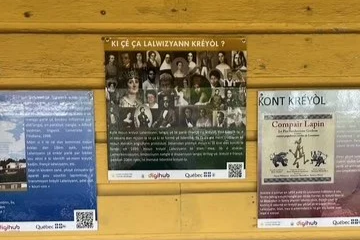
While this new tour adds another layer to better understand the preserved story, Dunn and his team try to shine light on the linguistic history that has shaped the lives and communities of these people. Laura Plantation offers tours in French and English to allow people everywhere to learn and reach a larger audience. In that respect, the plantation is not opposed to offering tours in Creole, but Dunn confesses that “it’s a lot of logistics” and Laura does not have enough Creole speakers to offer such a tour. Nonetheless, they are promoting the use of Louisiana’s languages in the local economy. Even though Louisiana preserves a link with its heritage, the infrastructure to nourish and support a French-Creole speaking workforce is not yet developed. Dunn told us, “Universities are still concentrated on literature and philosophy and not on French as a language of economic development and on the other hand, businesses are so Anglo-centric that they cannot see the benefits of bilingualism and trilingualism…We still have a lot of work to do in order to make people aware of this.”
Despite all, cultural sites such as Laura Plantation remain important for the local and international communities who search to understand Louisiana deeper. In spite of their importance, sites such as Laura are impacted by what happens in politics. Due to the increase of the cost of living, Laura has already witnessed a decline in domestic visitors since gas and grocery prices increased. A negative trend that has been amplified by the decrease in international visitors over the last few years caused by fear of being refused at the border.
Yet, for Dunn and the team at Laura Plantation, their mission is clear: continue to share the history and create a space where visitors can connect and recognize the complexity that was present on a Creole plantation. They invite all who want to learn to follow a tour to hear about the people who built Vacherie. They are open every day, visit their website to book a tour. Laura Plantation | Experience Louisiana's Creole Heritage Site