What’s going on with the Data Centers?
by Anthony Mouton
Rural communities throughout the country are filling town halls in retaliation. Cities have been calling for temporary bans or outright bans. States, notably both red and blue, have been proposing increasingly more regulation and even propositions of temporary construction pauses. Hyperscale data centers are being built across the country at a rate never seen before, and people have mixed views about it.
To understand the data center controversy that is gripping communities across the nation, it is first important to understand what exactly these centers are and why there seems to be so many new ones. Firstly, data centers are facilities that contain the physical infrastructure necessary for the processing of computational data which have existed for the past seventy years. This helps support everything from social media, websites, to e-commerce. However, there are different types of data centers that serve different functions. For example, some centers are to support a company’s individual computing needs while others can support providers who offer cloud service.
The type that has become most controversial has been what are called hyperscale data centers which by measurement are identified as spanning at least 10,000 sq ft. These are the large campuses that consume massive amounts of energy and can complete intense computing needs. With the first hyperscale data center completed in 2006 by Google, the rate at which these types of centers have been being constructed has severely increased as tech giants including Microsoft, Meta, Amazon, and Google race to prepare for what tech enthusiasts foresee as an AI revolution. The companies wish to gain a head start in the training of AI services which requires large computing power, and hyperscale data centers are how that can be achieved. Currently, over 500 operational hyperscale data centers exist in the U.S., which is over half of the amount of this type in the world, while over hundreds of others are under construction or are in proposal in the country.
The backlash that has risen largely stems from concerns of how the new massive centers will affect communities in the long term. In particular, hyperscale data centers require abundant electricity and water (to cool the hardware) for operation. For when the centers choose to use public grids and water systems, many rural communities simply lack the infrastructure for this increase and residents are sometimes worried that providers may spread the increases in costs which ultimately bring higher utility bills. Likewise, hyperscale data centers change land use significantly in an area as both its construction and operation bring about heavy industry that was not previously there. This creates detriment to the environment and a rise in noise pollution in addition to altering overall rural land use in a community (for example there would be less available land for agricultural uses). Though hyperscale data centers can provide thousands of temporary construction jobs and hundreds of permanent operation jobs, communities often feel left out from the process in deciding their own futures.
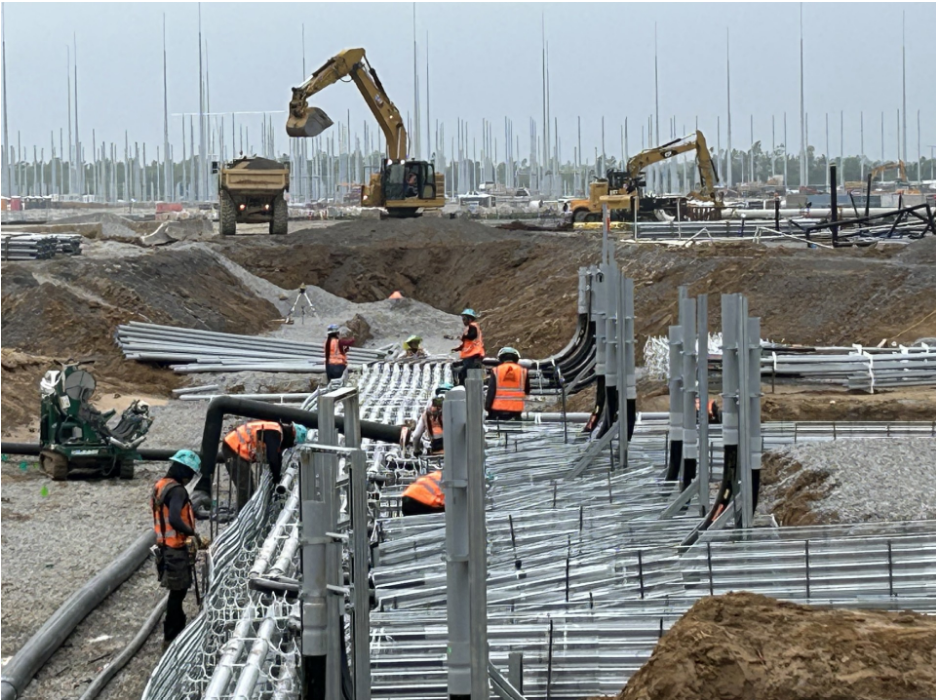
To make the trend clearer, we can consider a particular example. Meta’s Hyperion data center under construction in Richland Parish in Louisiana demonstrates the mix of motives present when these projects come about. Though three other hyperscale projects are underway in the state, Richland Parish’s center to be completed in 2030 is projected to be one of the largest data centers in the Western Hemisphere spanning 4 million square feet or 4,000 acres. For size, this will roughly cover the land of Manhattan and will consume three times the energy that New Orleans uses in a day. The project began in 2024 in the parish of about 20,000 where a quarter of residents live under the poverty line partially because of Act 730 passed by the Louisiana legislature that same year. The act was a quick rewrite of a bill that works to entice companies by offering 20 years of sales and use tax rebates that can be applied to be renewed with the requirement of only 50 permanent jobs and $200 million in investment. According to Meta, $10 Billion is being invested in the project while at least 5,000 temporary construction jobs and at least 500 operational jobs are being offered.
At the moment the only real pushback in the state is seen in New Orleans’s temporary year-long ban of data center construction passed in January 2026. From various reports, some Richland Parish residents are hesitant about how the mega center will change their lives and complaints regarding the construction process have already taken place. Other residents are optimistic as are local and state political leaders who hope that it will bring the needed jobs and opportunity for a relatively poor parish. The fast-track approval process, the nondisclosure agreements, along with Act 730 did contribute to bring about the project and others like it in the state, but critics say that this effort to diversify the state’s economy leaves out communities that will be most affected while also skipping other environmental or long term considerations. Although this “race to the bottom” quality of Louisiana’s approach to data center development is not very different from its general approach to economic development at times, the Meta data center project in Richland Parish demonstrates where this really can become the contentious issue that it is across the country. Poorer and rural communities have less power in determining their own futures and depending on the situation, political representatives can regard this as a problem to solve or something to use for other motives. The rise of data centers across the country are bringing these tensions to the forefront while highlighting the uncertainty concerning the trending subject that is AI. As for Louisiana, Governor Landry just signed an executive order in late June searching ways to stop increases in electricity bills while keeping the clear path for tech companies. As of now, it is not known what results this will bring.