You’re not Creole if You don’t speak our languages
A Creole man once told me, "You're not Creole if you don't speak our languages."
I came to understand that there was truth in that statement. Language is not a small thing. It carries memory, place, and ways of understanding a people that do not always survive translation. But I also heard a boundary being drawn around a people whose language had already become fragile because of forces much greater than any one individual. Whenever we spoke about Kouri-Vini, or simply "Creole" if you asked my people in Natchitoches, many people outside the community would dismiss it as "broken French" or "gibberish." Even more surprising, sometimes people who themselves identified as Creole would say the same thing. Many people had been taught to view our heritage as old-fashioned, incorrect, rural, embarrassing, or no longer valuable. For many families, Kouri-Vini became less a living language and more a cultural relic, but something remembered only in fragments, in prayers, jokes, and songs.
People often give two explanations for its disappearance. In the first, elders kept the language so they could speak freely about adult matters without children or outsiders understanding. In the second, Americanization, schooling, migration, and shame gradually pushed our ancestors to abandon the language. Either way, the result was the same. Kouri-Vini was no longer regularly passed from one generation to the next. Although there remained communities where people continued speaking it, that was not the reality for much of the Louisiana Creole diaspora. For many people, identity became more closely tied to family names, food, memory, and region than to language. But when language itself becomes a barrier to the community, its absence can leave people feeling less rooted, less at home within their own culture, and sometimes less able to see Creole identity as something whole.
There came a moment when our community suddenly felt closer despite the distance between us. Facebook groups, group chats, Instagram pages, and online comment sections became much more than places to talk. They became spaces where people researched, debated, and sometimes argued about our culture and our history. Creole people throughout the diaspora began asking deeper questions about who we were, what had been lost, and what had survived. These platforms became informal archives where people shared photographs, family histories, memories, and pieces of the language. Kouri-Vini and Louisiana French became central to that work of recovery. Every word we remembered, every correction, and every regional variation helped us gather what remained. The language gave a name to something many of us had already felt: our jokes, our families, our food, and our relationships with one another.
For a time, that work felt collective and intimate. The question of what it meant to be Creole no longer rested only in the hands of others. The language was being rebuilt in public by the very people from whom it came. During that moment, identity felt less like a barrier and more like something we were trying to remember together.
Daniele Simpson, an active member of the Creole community, said that she first discovered Kouri-Vini through the work of Dr. Thomas Klingler in the 1990s, when Klingler was documenting the language and culture of Louisiana Creole communities.
Like many people in the Louisiana Creole diaspora, that work became a gateway back to the language. Little by little, researchers, teachers, and community members built upon that foundation. The work of Dr. Thomas Klingler, Dr. Deborah Clifton, Ingrid Neumann, and many others opened the path. Later, people such as Dr. Christophe Landry, Michael Gisclair, Shantal Frazier, Taalib Pierre-Auguste, Alexandre LeBlanc, Jonathan Mayers, Adrien Guillory-Chatman, Chanel Jones, Amber Jones, Oliver Mayeux, Nathan Wendte, and many others carried the language from community recovery into a broader public movement.
The language began appearing in books, dictionaries, workshops, organizations, and public institutions. To make it easier to learn, teach, and present, a shared orthography was developed, and the name Kouri-Vini became the primary name many people used for the language in order to present it publicly as a legitimate language. But that formalization also changed who held influence over the language. That authority did not only reshape its name or orthography. It also influenced which expressions were promoted, which regions became more visible, and how our people came to be represented. Standardization helped prevent the erasure of Kouri-Vini, but at the same time it revealed an important truth: whenever a culture is made more visible, parts of its complexity and some of its elements are quietly sacrificed.
As Kouri-Vini became increasingly accessible during this Creole renaissance promoted by institutions, more people found their way back to our language. Many began reconnecting with themselves through resources such as the Ti Liv Kréyòl dictionary and online lessons from Chinbo Inc. and Patreon. Through platforms like TikTok and Threads, people both within and outside our community began using Kouri-Vini more frequently. That broader participation also created tensions. Some people used the language without fully understanding its grammar or regional context. At the same time, others were bringing back family expressions, creating new ones, and finding new ways to use the language in everyday life.
For Simpson, the future is not simply about preserving Kouri-Vini. It needs films, music, television programs, books, and everyday things that allow a language to remain useful, creative, and alive.
These changes show what happens when a language moves from family memory to community recovery, then into institutions, and finally into the hands of everyone, both inside and outside the community, who do not all share the same relationship with it, knowledge of it, or responsibility toward it.
That brings me back to the statement: "You're not Creole if you don't speak our languages." Now I understand why the language is important. But I also understand how it can become a barrier and vulnerability. If reclaiming our language also means reclaiming our identity, then what kind of community are we building? What defines what it means to be Creole? How do we make room for our people while protecting our language? And what kind of future do we want to leave for the generations that follow?
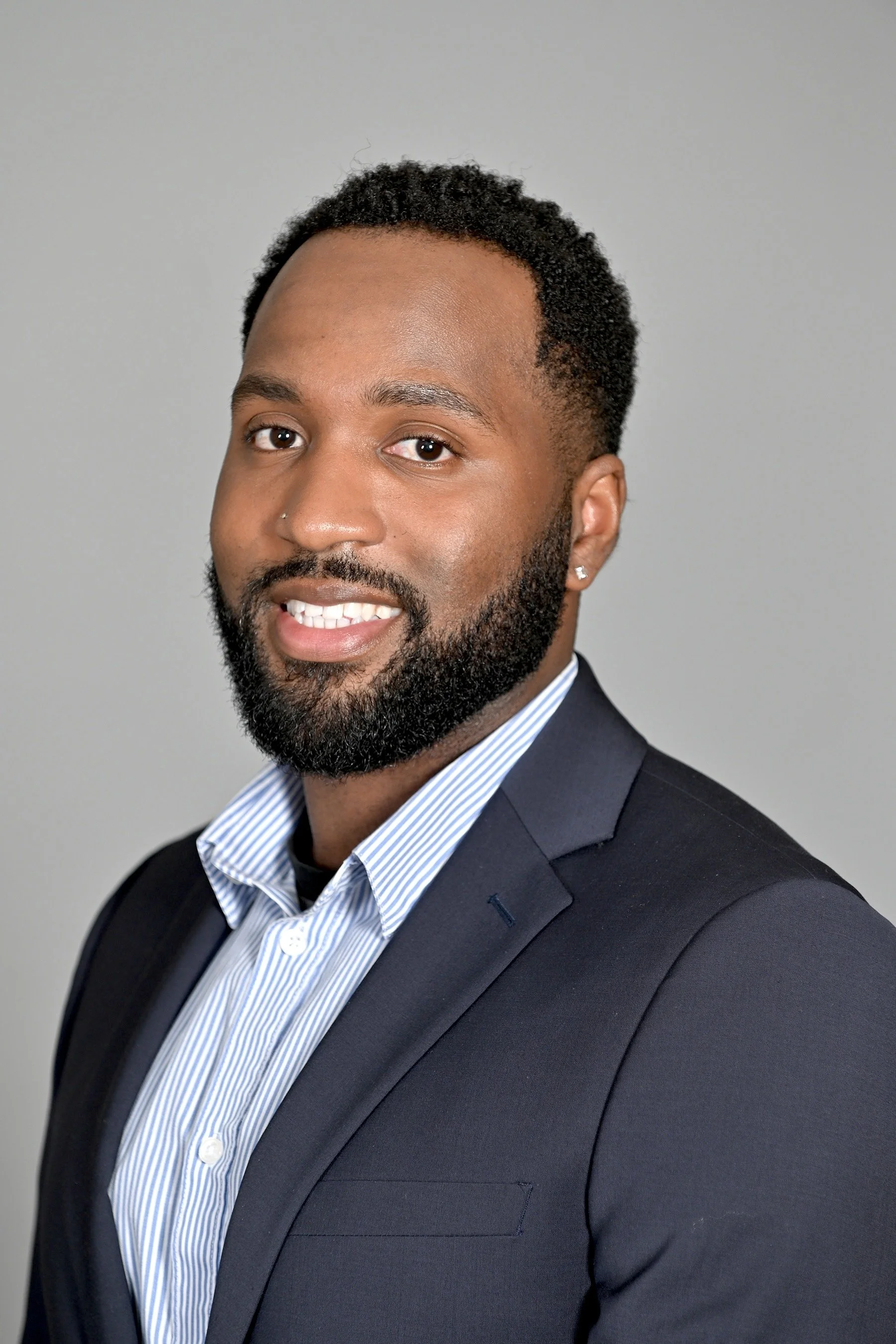
Kaël “Chaoui” Leblanc
Leblanc is a banker and development strategist whose work has included environmental revitalization across Latin America, financial resilience planning in the Caribbean, and strategies that strengthen community economies and organizational capacity throughout the Gulf South. He hopes to support the revitalization of Creole culture and the preservation of Kouri Vini and Louisiana French by incorporating his culture in future academic papers and literary projects.