I’m from the South and I got something to Say
Listen to us in The South cuz we got somethin’ to say and work to do!
I’m feeling some type of way about the state of things in this country and I am going to get it off my chest.
Right now across the entire South, our political power is under assault — in broad daylight, through courtrooms, state legislatures, and congressional maps drawn behind closed doors designed to make sure specific votes never add up to real representation. At the same time, there is a growing cacophony of voices online telling Black and marginalized people in the South to uproot our lives and run North — abandoning our communities, our history, our ties to soil that our grandparents and great-grandparents fought, bled, and in too many instances paid the ultimate price for. Let’s be for real: that ain’t the move, and I’mma tell you why.
People deliberately engineered this crisis. This is a system doing exactly what it was designed to do.
On April 29, 2026, the Supreme Court handed down Louisiana v. Callais — a 6-3 decision that struck down Louisiana’s majority-Black congressional district and gutted Section 2 of the Voting Rights Act. The ruling changed the standard for challenging racial discrimination in voting, now requiring plaintiffs to prove intentional discrimination rather than discriminatory effects — eliminating a protection that had stood for decades.
The NAACP Legal Defense Fund called it one of the most serious attacks on voting rights in decades. Justice Elena Kagan called it a “demolition.” And as someone traces my roots back to Louisiana, I rightfully take this personally.
Black Voters Matter, said the Callais ruling puts 191 state legislative seats at risk of elimination, with Black-majority districts potentially falling from 273 to 146 — a loss of nearly half of all Black-majority districts in the South.
Texas was the blueprint for how fast this moves. New congressional maps targeted five Democratic seats in the Austin, Dallas, Houston, and South Texas metros, engineered to create additional white Republican-majority districts — despite Hispanic residents being the state’s largest demographic group.
Yes, some will say the South is too expensive, too entrenched, too much of an uphill battle. And yeah, it’ll be hard work. But unilaterally disarming during blatant political aggression — abandoning the region where the majority of Black Americans live — is surrender.
We have been here before.
In the early 1900s, many of our ancestors joined the Great Migration, reeling from racism, financial trauma, and socio-political terrorism in the South, hoping to build a better life. And yet, fleeing North didn’t make discrimination disappear. The massacres followed. The East St. Louis Massacre of 1917. The Red Summer of 1919. Numerous more. Moving doesn’t protect us. Building power does. Over the last few decades Black Americans have been returning South as part of a “New Great Migration,“ because of economic opportunity, family roots, and a reclaimed sense of place. The majority of Black people in this country still reside in the South — and that’s leverage, if we invest in it.
The solution is to build in the South, not abandon it.
There are leaders down here doing outstanding work in community organizations and local government, who’ve been sounding the alarm for a real Southern strategy — one replete with the resources to connect, organize, and show up in force now and into the future. This is a both/and moment. Of course, we need to maintain progress in the Northern and coastal “Amen Corners” where gains are being made; AND we must act with courage in the places that push back. Organizations committed to justice need to show up here with dollars, with conferences, with infrastructure — not just statements. There are people in these communities ready to engage and build, but they never get a seat at the table because the table is always set somewhere else.
Investing in the South is not activism. It is common sense.
The South is an underfunded cause — not a lost one. Look at what happened to voting access after Shelby County v. Holder in 2013 — that is what underinvestment costs. When the infrastructure of protection is dismantled and nothing is built to replace it, power consolidates. The political consultants running cookie-cutter playbooks in their safe spaces are not the answer.
Redirecting organizing dollars, conference revenue, and political infrastructure into Southern communities before November 2026 is one of the highest-leverage moves we can make right now — and our best shot at breaking the cycle. Yes, we need people to vote. AND political apparatuses need to invest in the communities showing up for them — not parachute in weeks before an election and vanish after the election results. We deserve real, sustained investment and transformational leadership that sees the South as a foundation, not an afterthought.
I’m a Southerner watching my people’s political power be stripped away — and I’m not gonna just stand by and take it. With the 2026 midterms fast approaching, the authors of this crisis are counting on our exhaustion, our division, our absence and they can miss me and you with that.
Let’s stop the bad by protecting our right to vote and let’s build the good by investing here, organizing here, rerooting ourselves here. Im not gonna give them what they’re counting on and you should’t either.
Go to Hip Hop Caucus Respect My Vote! Platform and make a plan to vote, organize, and show up. We must protect our voting rights.
Listen to us in The South cuz we got somethin’ to say and work to do!
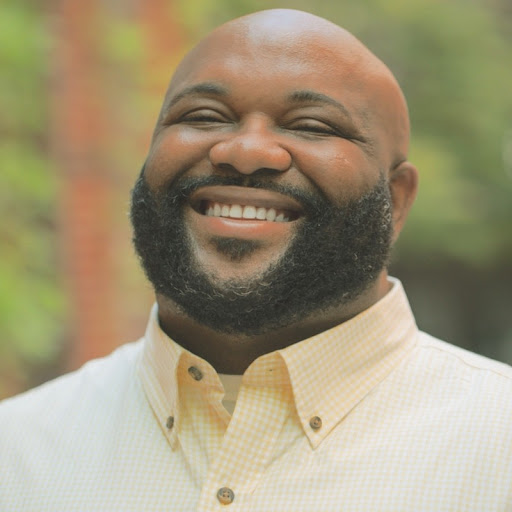
Stephone Coward II
Stephone Coward II is an economic justice strategist and financial activist working at the intersection of finance, racial justice, and political advocacy. Drawing on nearly two decades in banking, he designs campaigns and narratives that push decision-makers to shift money away from harmful industries and toward community led solutions that build the good, while helping everyday people use their voices, votes, and money as tools for justice.